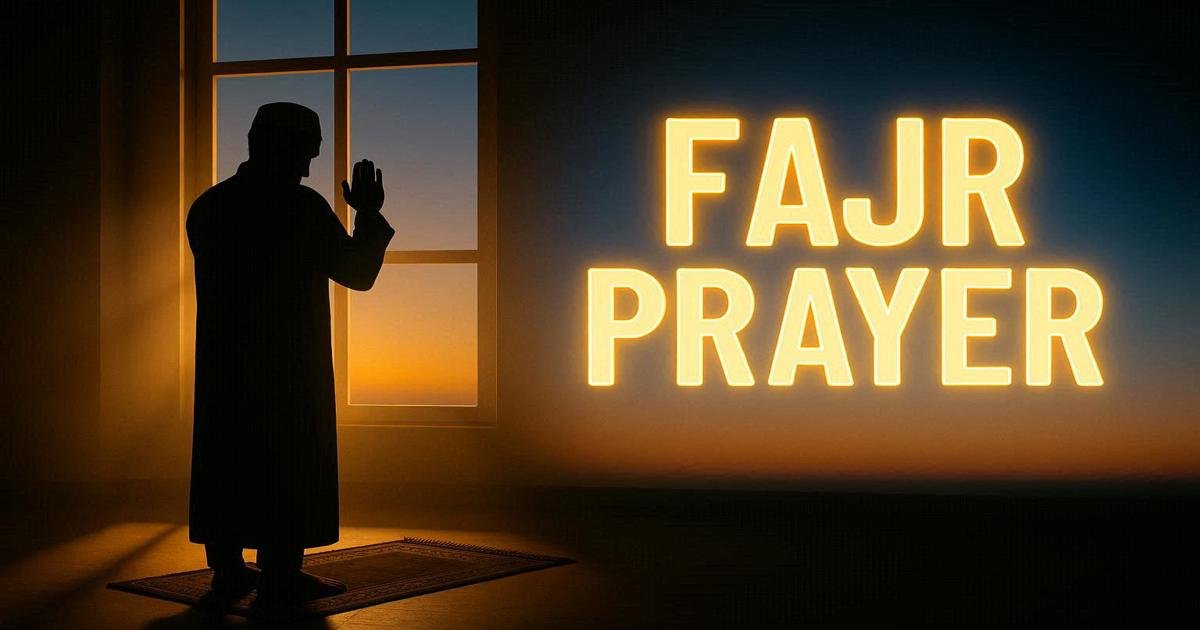
Fajr Prayer Time—Complete Guide
Table of Contents
- Introduction: The Importance of Fajr
- When Does Fajr prayer time begin?
- When Does Fajr Prayer Time End?
- The Virtue of Praying Fajr on Time
- What to Do If You Miss Fajr Prayer
- FAQ About Fajr Prayer Time
1. Introduction: The Importance of Fajr
The Fajr prayer time marks the beginning of the day for a Muslim. It is the first of the five obligatory prayers and holds a special status in Islam. Praying at dawn requires sacrificing sleep and comfort, which is a profound act of obedience. This prayer distinguishes a believer from a non-believer and brings immense blessings for the rest of the day.
2. When does Fajr prayer time begin?
The Fajr time begins at true dawn, which is the appearance of a white light spreading across the horizon. This is known as the "second dawn" (al-fajr al-thani). It is the signal that the night has ended, and the time for prayer and the start of the daily fast has begun.
"And eat and drink until the white thread of dawn becomes distinct to you from the black thread [of night]." (Surah Al-Baqarah 2:187)
This verse establishes that the Fajr prayer time is precisely at this first light. It is a time of peace, angels, and divine mercy.
3. When does Fajr prayer time end?
Many people know when to start, but confusion often arises about the end of the dawn prayer time. The time for Fajr lasts until sunrise. Once the sun begins to rise, the time for Fajr expires.
"The time for Fajr prayer is from the appearance of dawn until the sun rises." (Sahih Muslim)
Therefore, it is essential to complete at least one rak'ah (unit of prayer) before the sun's disk appears above the horizon. Delaying it intentionally until sunrise is a major sin.
4. The Virtue of Praying Fajr on Time
Observing the morning prayer at its prescribed time carries rewards beyond imagination. It is a sign of true faith and brings protection for the entire day.
"Whoever prays the Fajr prayer is under the protection of Allah." (Sahih Muslim)
Furthermore, praying Fajr on time allows a Muslim to start the day with obedience, setting a positive tone. It also brings light to the face and peace to the heart, as the believer has fulfilled their duty to their Creator before attending to worldly affairs.
5. What to do if you miss Fajr
Despite the best intentions, a person may occasionally oversleep or forget to pray. Islam is a religion of mercy, and it provides a solution for such human shortcomings.
If one misses the Fajr prayer time, they must pray it as soon as they wake up or as soon as they remember. There is no sin in forgetting or sleeping through it, but delaying it intentionally after waking is not permissible.
"Whoever forgets a prayer, or sleeps through it, its expiation is to pray it when he remembers it." (Sahih al-Bukhari)
This ensures that the believer does not remain in a state of negligence and quickly returns to obedience.
6. FAQ About Fajr Time
Q1: Can I pray Fajr just before sunrise?
A: Yes, you can pray Fajr at any point during its time window, from true dawn until just before the sun starts to rise. However, it is best to pray for it early (at the beginning of its time) to gain the most reward.
Q2: Is it better to pray Fajr early or late?
A: It is highly recommended to pray Fajr during its first time. The Prophet ﷺ used to pray the dawn prayer when it was still dark. This is known as ghalas and carries greater virtue.
Q3: How do I know the exact Fajr time in my city?
A: You can use reliable local Islamic centers, verified mobile applications, or accurate printed prayer timetables. Because prayer times depend on the sun's position, they vary by geographic location.
Q4: What if I pray Fajr and then go back to sleep?
A: While it is permissible to sleep after praying Fajr, scholars strongly recommend staying awake. The early morning hours are blessed for seeking knowledge, starting work, or making dhikr (remembrance of Allah). The Prophet ﷺ prayed: "O Allah, bless my nation in their early mornings." (Sunan Abi Dawud)
Q5: What is the difference between Fajr and Subh prayer?
A: They are the same prayer. The two rak'ahs before the obligatory prayer are called the Sunnah of Fajr, which the Prophet ﷺ never missed. The two rak'ahs after the adhan are the obligatory Fajr prayer.
No comments yet. Be the first to share your thoughts!