Table of Contents
- Introduction: The Importance of Prayer Times
- Zuhr Prayer Time: The Exact Start
- Zuhr Prayer Time: The Exact End
- The Friday Exception: Jummah Prayer
- The Virtue of Praying on Time
- Frequently Asked Questions About Zuhr Prayer Time
1. Introduction: The Importance of Prayer Times
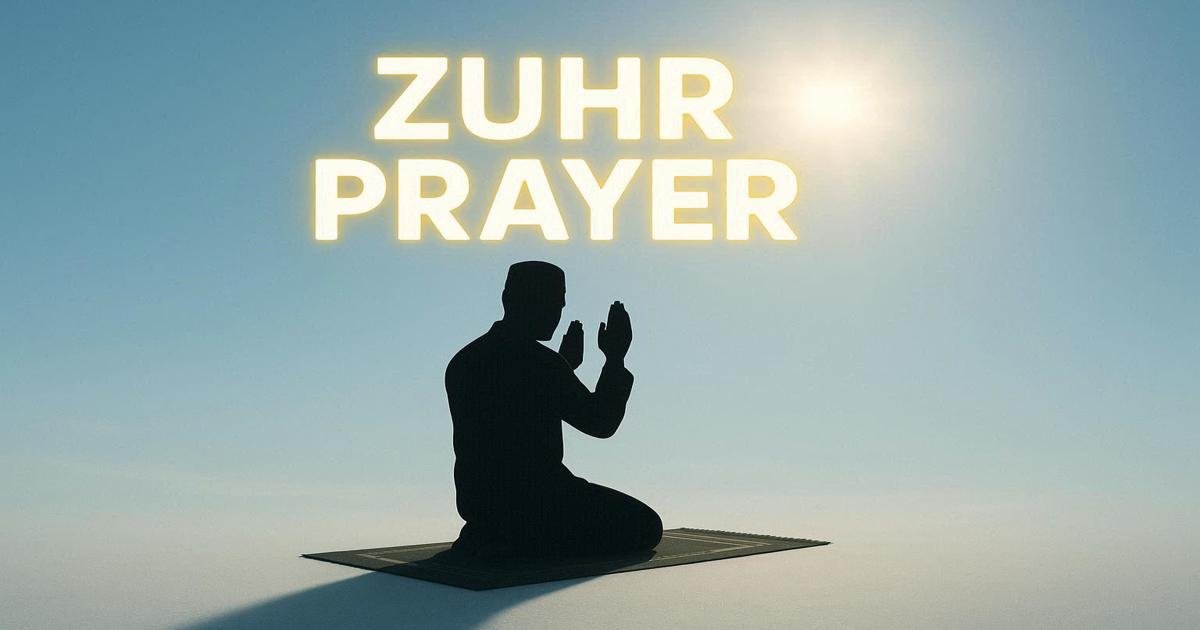
Prayer (Salah) is the backbone of the Islamic faith, and observing it at its correct time is a fundamental command. Allah emphasizes the precision of this act of worship throughout the Quran. Knowing the exact Zuhr Prayer Time is essential because it marks the transition from the spiritual peace of the morning to the busy activity of the afternoon. This guide provides the authentic boundaries for the Zuhr prayer as taught by the Prophet Muhammad ﷺ, ensuring your worship is valid and accepted.
2. Zuhr Prayer Time: The Exact Start
A clear and observable natural phenomenon marks the beginning of the Zuhr Prayer Time. It is not based on a clock invented by man, but on the movement of the sun, a sign of Allah's creation.
"Perform As-Salat (the prayer) from midday till the darkness of the night (i.e. the Zuhr, Asr, Maghrib, and Isha prayers)…" (Surah Al-Isra 17:78)
According to the consensus of the companions of the Prophet ﷺ and the scholars who followed them, "midday" here refers to the moment the sun passes its zenith. Specifically, the Zuhr Prayer time begins immediately after the sun crosses the highest point in the sky and begins to incline towards the west. This is the moment when shadows begin to shorten and then lengthen again.
3. Zuhr Prayer Time: The Exact End
Every prayer time has a window, and the Zuhr prayer time ends when the time for the next prayer, Asr, begins. The Prophet ﷺ physically demonstrated these timings to humanity to remove any confusion. He ﷺ said:
"The time for Zuhr is from when the sun passes its zenith until a man's shadow is the length of his stature." (Sahih Muslim)
This authentic hadith provides a clear boundary. The end of the Zuhr Prayer Time arrives when the shadow of an object becomes equal to its actual length, plus the length of the shadow that was present at midday (the zenith shadow). Once the shadow exceeds that length, the time for the Asr prayer begins. It is crucial to perform Zuhr before this threshold is reached.
4. The Friday Exception: Jummah Prayer
For Muslim men, the Friday prayer (Jummah) replaces the regular Zuhr prayer. However, the timing is identical. The Jummah prayer must also be performed during the Zuhr prayer time.
The Quran commands this gathering specifically during this time window:
"O you who have believed, when [the adhan] is called for the prayer on the day of Jumu'ah [Friday], then proceed to the remembrance of Allah and leave trade." (Surah Al-Jumu'ah 62:9)
After the Jummah prayer is concluded, the time for the rest of the Zuhr Prayer Time continues, meaning if one misses the congregation, they do not pray Jummah, but they must still pray the regular 4 rakats of Zuhr before the time expires.
5. The Virtue of Praying on Time
Observing the Zuhr prayer time correctly is not just a technicality; it holds immense reward. Praying at the beginning of the time window is considered the best of deeds. The Prophet ﷺ was asked:
"Which deed is the most beloved to Allah?" He ﷺ replied, "Prayer offered on its time." (Sahih al-Bukhari)
This highlights that consistency and punctuality in worship are paramount. Whether it is Fajr Prayer Time in the darkness before dawn, or Zuhr Prayer Time in the heat of the afternoon, fulfilling this obligation brings a Muslim closer to Allah.
6. Frequently Asked Questions About Zuhr Prayer Time
Q1: What is the exact Zuhr prayer time today?
A: While the clock time varies by geographic location and season, the Islamic definition remains constant. The Zuhr Prayer Time begins when the sun passes its zenith (local noon) and ends when an object's shadow equals its length. You should check your local Islamic center or a trusted prayer time app for the precise clock time in your city today.
Q2: Can I pray Zuhr 10 minutes before Asr?
A: Yes, as long as the Zuhr prayer time has not ended. It is permissible to pray Zuhr in the last part of its window, though it is virtuous to pray at the beginning. However, it is disliked to delay a prayer so close to the next prayer time without a valid reason.
Q3: How many rakats are in Zuhr?
A: The obligatory portion of the Zuhr prayer is four rakats. However, the Prophet ﷺ regularly prayed additional voluntary prayers alongside it. He ﷺ said: "Whoever prays four rakats before Zuhr and four after it, the Fire will not touch him." (Sunan an-Nasa'i).
Q4: What is the difference between Zuhr and Jummah?
A: Jummah is a specific Friday congregational prayer that replaces the Zuhr prayer for men. It consists of a sermon (Khutbah) followed by two rakats of prayer. It must be performed during the Zuhr prayer time. Women may choose to pray Jummah or pray Zuhr privately at home.
Q5: How did the companions of the Prophet ﷺ determine the time?
A: They relied on direct observation of the sun and shadows, following the teachings of the Messenger of Allah ﷺ. This physical connection to the natural world is why the Zuhr Prayer Time remains consistent in principle everywhere on Earth.