Let’s talk about it.
Table of Contents
- Why Do Muslims Pray Five Times a Day? Let’s Talk About It
- First Things First—It’s a Direct Command
- The Prophet ﷺ Showed Us How It’s Done
- Picture This… You’re Running on Empty
- Okay, But Why Five Times? Why Not Just Once?
- Here’s What Happens When You Start Praying Every Day
- A Little Side Note—Obligatory vs. Extra Prayers
- Quick Takeaways (Because Life’s Busy)
- Questions You Might Be Wondering
- A Gentle Challenge for You
- If This Connected With You, You Might Like…
Why do Muslims pray five times a day? Let’s Talk About It
Okay, let’s be real for a moment.
If you’ve ever seen a Muslim disappear from work, step out of a family gathering, or roll out a small rug in the most unexpected places, you’ve probably wondered: why do Muslims pray five times a day?
Like, isn’t once enough? Morning prayer done, let’s move on?
I used to think like that, too. Honestly. Before I really understood the why behind it, it just seemed like… a lot.
But then I started paying attention. Not just to the movements—but to the feeling. And slowly, I realized something.
It’s not about checking a box. It’s about staying alive. Spiritually alive.
Let me explain.
First Things First—It’s a Direct Command
So the simplest answer to why do Muslims pray five times a day? Allah commanded it.
No sugarcoating. No complicated philosophy. It’s a direct instruction from One who created us.
Allah says in the Quran:
“Indeed, prayer has been decreed upon the believers at specified times.” (Quran 4:103)
Notice the word specified. This isn’t random. It’s structured. Like a heartbeat—steady, consistent, reliable.
Think of it like this: a student follows a timetable to succeed. If they just studied whenever they felt like it? Chaos. Prayer times are our spiritual timetable. They keep us grounded when life tries to pull us in a hundred directions.
The Prophet ﷺ showed us how it’s done
Now, here’s something beautiful.
The Prophet ﷺ didn’t just teach prayer—he lived it. Every single day. Through joy, through hardship, through exhaustion.
He ﷺ said:
“Islam is built upon five pillars…” (Bukhari & Muslim)
And right there in the middle? Prayer. Salah. The second pillar.
But here’s the part that gets me. These five daily prayers weren’t revealed on earth. They were given during the Night Journey—Isra and Mi’raj. The Prophet ﷺ traveled beyond the heavens, and that’s where this gift came down.
Imagine that. Allah called His beloved servant up… to give us a gift.
It shows you how important this is. Not a burden. A gift.
Picture this… You’re running on empty
Let’s imagine something together.
It’s 2 PM. You’ve been working since morning. Your brain feels like mashed potatoes. Your back hurts from sitting too long. You’re stressed, maybe even a little irritable.
Then the prayer time comes.
You step away. Wash your face, your hands, your feet. Cool water on tired skin. You stand, you bow, you prostrate. For a few minutes, the world stops demanding things from you.
And when you’re done? You breathe. You feel lighter.
That’s what prayer does. It resets you.
Allah says:
“Indeed, prayer prevents immorality and wrongdoing.” (Quran 29:45)
Not just because it’s a checklist, but because it pulls your heart back to what actually matters. It reminds you: you’re not alone. You’re connected.
Ever notice how people say prayer helps with stress? Or how some find it helps with PTSD, anxiety, the weight of life? There’s wisdom here. Science is only now catching up to what Muslims have known for 1,400 years.
Okay, but why five times? Why not just once?
Fair question.
If we only prayed once a day—say, in the morning—by lunchtime, we’d probably forget. By evening? Completely distracted.
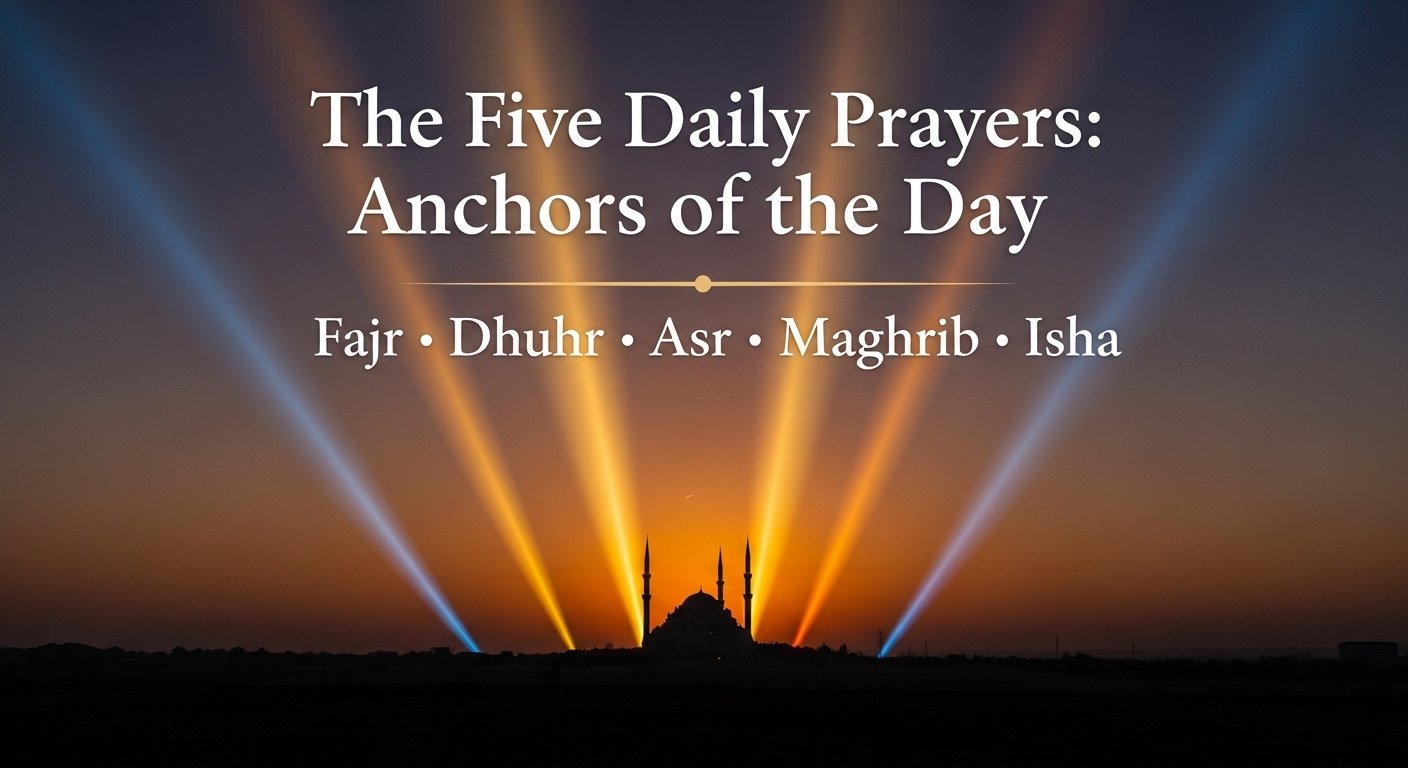
Five prayers spread across the day act like anchors.
Let’s walk through them:
- Fajr (dawn): You start your day with Allah. Before the chaos. Before the notifications. Just peace.
- Dhuhr (midday): Right when the world is loudest, you pause. Recenter.
- Asr (afternoon): The day is long. You refocus before the evening hits.
- Maghrib (sunset): The day ends. You reflect. Let go of what didn’t work.
- Isha (night): You end your day with peace. Sleep with Allah in your heart.
See the rhythm?
It’s like charging your phone. If you charged it once a week? Dead by day two. Your soul needs regular recharging too. That’s what the five prayers do.
Here’s What Happens When You Start Praying Every Day
So you might be wondering… what actually changes when you start praying every day?
I’ll tell you what I’ve noticed—and what millions of Muslims experience.
1. You become more mindful.
You start thinking before you act. Is this worth it? Will this harm my prayer later?
2. You find peace in the middle of chaos.
Even on the worst days, prayer becomes a safe space. Five times a day, you step into quiet.
3. You stop feeling alone.
Life gets heavy. But knowing you’ll connect with Allah in an hour? That carries you.
4. Your beauty—inside and out—changes.
There’s even a beautiful saying that prayer brings light to the face. Not in a superficial way, but in the way peace makes a person glow. Which namaz increases beauty? Honestly, all of them—because the heart becomes softer.
5. You start seeing blessings you missed before.
Gratitude grows. You notice small joys—the warmth of sunlight, a kind word, a moment of laughter.
Does prayer help with PTSD? Anxiety? Stress? Many find it does—because it gives structure, safety, and a connection to something greater than the pain.
A Little Side Note—Obligatory vs. Extra Prayers
Let’s clear this up quickly.
The five daily prayers? Obligatory. Non-negotiable. Like the foundation of a house.
Then there are extra prayers—Sunnah, Nafl. Optional, but beautiful. Like adding decorations, extra rooms, and making the house more beautiful.
The Prophet ﷺ encouraged these extra prayers, but he never missed the five.
So if you’re starting? Focus on the five. Build that foundation. Then add more when you’re ready.
Quick Takeaways (Because Life’s Busy)
- Why do Muslims pray five times a day? Because Allah commanded it—as a mercy, not a burden. (Quran 4:103)
- The Prophet ﷺ received this gift during the Night Journey and never missed it. (Bukhari & Muslim)
- Five prayers structure the day—from dawn to night—keeping you spiritually anchored.
- Prayer protects from sins, reduces stress, and brings peace. (Quran 29:45)
- Start praying daily, and you’ll notice: more mindfulness, less loneliness, deeper gratitude.
- It’s okay to start imperfectly. Just start.
Questions You Might Be Wondering
Q1: Can Muslims pray less than five times?
No, the five daily prayers are obligatory. Missing them without a valid reason is serious. But if you miss one? Repent, make it up, and keep going. Allah is Merciful.
Q2: Why are prayers at different times?
To keep you connected throughout the day. Morning, midday, afternoon, evening, night—each prayer catches you at a different moment, pulling you back to remembrance.
Q3: Are optional prayers necessary?
Not required, but they bring extra reward and closeness to Allah. Think of them as bonus good deeds.
Q4: What happens if someone skips prayer?
It’s a serious matter. The scholars teach that prayer is the difference between faith and disbelief. If you’ve missed prayers, repent sincerely and start making them up. Allah’s mercy is vast.
Q5: Does prayer actually help with stress and PTSD?
Many find deep healing in prayer. The structure, the quiet, the connection to Allah—it creates a safe space for the heart. While professional help is important too, prayer is a powerful companion on the healing journey.
A Gentle Challenge for You
Here’s a small thing to try.
Just for today, pick one prayer. Anyone. Pray it with full presence. Don’t rush. Feel the water on your skin during wudu. Stand still. Let the words settle in your heart.
Notice how you feel after.
Then tomorrow, try two.
No pressure. No perfection. Just… showing up.
Because when you start praying every day, something shifts. Slowly. Quietly. You begin to feel anchored. Less scattered. More at peace.
And one day, you’ll realize: the question of why Muslims pray five times a day isn’t about obligation anymore. It’s about love.
If this connected with you, you might like…
- Importance of Salah in Islam
-
Are Muslims allowed to say "Oh my God"?