Table of Contents
- First Things First—Why Fajr Hits Different
- What You’ll Need Before You Start
- Okay, Let’s Pray—Step by Step
- Step 1: Make Your Intention (Niyyah)
- Step 2: Start With Takbir—Allahu Akbar
- Step 3: Recite Surah Al-Fatiha
- Step 4: Recite Another Short Surah
- Step 5: Bow Down—Ruku
- Step 6: Stand Back Up
- Step 7: Prostrate—Sujood
- Step 8: Sit Briefly, Then Second Sujood
- Step 9: Stand for the Second Rak’ah
- Step 10: Sit for Tashahhud
- Step 11: End With Salam
- Quick Visual Recap (Because Sometimes We Need It)
- What the Quran and Hadith Say About Fajr
- Honestly? Waking Up Is the Hardest Part
- Quick Takeaways
- Questions You Might Be Wondering
- A Gentle Challenge for You
- If This Helped, You Might Also Like…
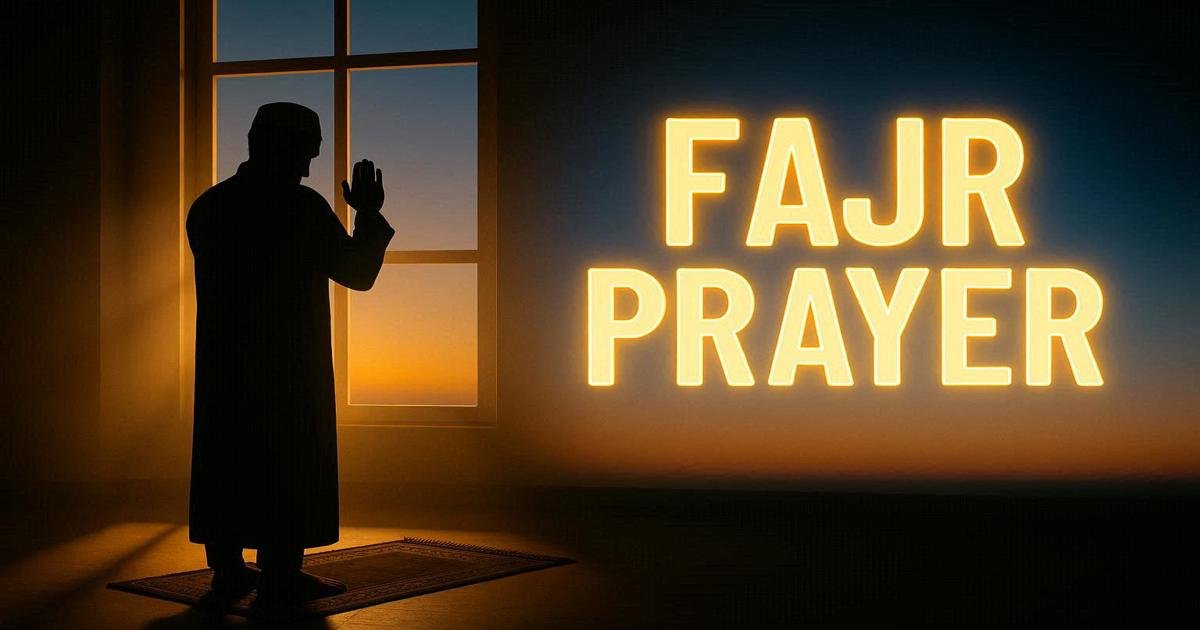
First Things First—Why Fajr Hits Different
Ever noticed how the morning has a certain stillness? The birds aren’t even up yet. The air feels fresh. And there’s this quiet peace that you can’t find at any other time.
Praying Fajr in that stillness? It’s like starting your day with a deep breath before the chaos begins.
The Prophet ﷺ said something beautiful about Fajr. He said: “Whoever prays the dawn prayer is under the protection of Allah.” (Muslim 657)
Think about that. You wake up, you pray, and you step into your day knowing Allah’s got your back. That’s powerful.
What You’ll Need Before You Start
Before we jump into how to pray fajr salah step by step, let’s cover the basics. You’ll need:
- A clean body: Perform wudu (ablution). Wash your hands, mouth, nose, face, arms, head, and feet. If you already have wudu from before sleeping, you’re good to go.
- A clean place: Any clean spot works. A prayer mat, a clean floor, even a towel.
- Clean clothes: Nothing fancy. Just clean and covering what needs to be covered.
- Face the Qiblah: That’s the direction of the Kaaba in Makkah. If you’re unsure, there are apps for that—no shame.
Okay, Let’s Pray—Step by Step
Fajr has two rak’ahs (units). That’s it. Short and sweet. Let’s break it down.
Step 1: Make Your Intention (Niyyah)
This happens in your heart. No need to say it out loud. Just pause. Feel it. I am praying two rak’ahs of Fajr, facing the Qiblah, for Allah. That’s it. Simple.
Step 2: Start With Takbir—Allahu Akbar
Raise your hands to your ears—palms facing forward—and say: Allahu Akbar (Allah is the Greatest). Feel it. You’re stepping into something sacred. The world outside can wait.
Step 3: Recite Surah Al-Fatiha
Place your right hand over your left on your chest. Recite Surah Al-Fatiha slowly. It’s the opening chapter of the Quran. Every prayer needs it. Translation: All praise is for Allah, Lord of all worlds. The Most Gracious, the Most Merciful. Master of the Day of Judgment. You alone we worship, and You alone we ask for help. Guide us to the straight path… (Quran 1:1-6)
Step 4: Recite Another Short Surah
After Al-Fatiha, recite a short surah. Surah Al-Ikhlas is a beautiful one: Say: He is Allah, the One. Allah, the Eternal Refuge. He neither begets nor is born. Nor is there to Him any equal. (Quran 112:1-4)
Step 5: Bow Down—Ruku
Say Allahu Akbar and bow down. Keep your back straight, hands on your knees. Say softly: Subhana Rabbiyal Adheem (three times) — Glory be to my Lord, the Most Great.
Step 6: Stand Back Up
Rise up, saying: Sami’allahu liman hamidah (Allah hears those who praise Him). Then stand for a moment and say: Rabbana wa lakal hamd (Our Lord, all praise belongs to You).
Step 7: Prostrate—Sujood
Say Allahu Akbar and go down into prostration. Your forehead, nose, palms, knees, and toes touch the ground. Say softly: Subhana Rabbiyal A’la (three times) — Glory be to my Lord, the Most High.
Step 8: Sit Briefly, Then Second Sujood
Say Allahu Akbar and sit up for a moment. Rest your hands on your thighs. Pause. Then say Allahu Akbar and go into sujood again. Repeat Subhana Rabbiyal A’la three times.
Step 9: Stand for the Second Rak’ah
Say Allahu Akbar and stand up. This is the second rak’ah. Repeat: Al-Fatiha + short surah, Ruku, stand, Sujood (twice).
Step 10: Sit for Tashahhud
After the second sujood, sit for the Tashahhud. Recite softly: Attahiyyatu lillahi wassalawatu watayyibat. Assalamu alaika ayyuhan nabiyyu wa rahmatullahi wa barakatuh. Assalamu alaina wa ala ibadillahis salihin. Ashhadu alla ilaha illallah wa ashhadu anna Muhammadan abduhu wa rasuluh. Then send blessings on the Prophet ﷺ: Allahumma salli ala Muhammad wa ala ali Muhammad…
Step 11: End With Salam
Turn your head to the right and say: Assalamu alaikum wa rahmatullah (Peace be upon you and the mercy of Allah). Then turn to the left and say it again. That’s it. You’ve prayed.
Quick Visual Recap (Because Sometimes We Need It)
- Intention in your heart
- Takbir – Allahu Akbar
- Al-Fatiha + short surah
- Ruku – bowing
- Stand back up
- Sujood – prostrate (twice)
- Stand for second rak’ah
- Repeat steps
- Sit for Tashahhud
- Salam to end
What the Quran and Hadith Say About Fajr
Allah speaks about Fajr with such beauty. He says: “Establish prayer at the decline of the sun until the darkness of the night and the Quran at dawn. Indeed, the Quran at dawn is ever witnessed.” (Quran 17:78)
The Prophet ﷺ said: “The two rak’ahs of Fajr are better than the world and everything in it.” (Muslim 725). Better than the whole world. Let that sink in.
Honestly? Waking Up Is the Hardest Part
The hardest part of Fajr isn’t the prayer itself. It’s the waking up. I’ve hit snooze more times than I can count. But here’s what helps me:
- Sleep with intention. Tell yourself before bed: I’m waking up for Allah.
- Set your alarm away from the bed. Forces you to stand up.
- Splash water on your face. That cold water? Instant wake-up call.
- Find a prayer buddy. Someone who checks in. Accountability helps.
Quick Takeaways
- How to pray fajr salah step by step is simple: two rak’ahs with specific movements and recitations.
- Fajr is prayed when the first light appears before sunrise.
- Surah Al-Fatiha is recited in every rak’ah.
- The Prophet ﷺ said Fajr is better than the world and all it contains. (Muslim 725)
- Allah sends His angels to witness Fajr prayer. (Quran 17:78)
- Waking up is the real challenge—be gentle with yourself.
Questions You Might Be Wondering
Q1: Can I pray Fajr after sunrise if I miss it?
Yes. If you sleep through it, pray as soon as you wake up. The Prophet ﷺ said: “Whoever forgets a prayer or sleeps through it, let him pray it when he remembers.” (Bukhari 597)
Q2: Do I have to recite the surahs in Arabic?
Yes, the Quran is recited in Arabic during prayer. But if you’re learning, it’s okay to take time. Allah knows your effort.
Q3: How long does Fajr prayer take?
If you take your time? Maybe 5–7 minutes. Even less if you’re rushing. But slow is better—more connection.
Q4: Can I pray Fajr in my bed?
If you can stand, stand. That’s the proper way. If you’re sick or unable, you can sit. Allah doesn’t burden a soul beyond what it can bear. (Quran 2:286)
Q5: What if I don’t know all the words yet?
Start with Al-Fatiha. Learn it slowly. In the meantime, you can say “SubhanAllah” in place of other recitations while learning. The goal is progress, not perfection.
A Gentle Challenge for You
Try this tomorrow: Set your intention before sleep. Place your phone across the room. When the alarm rings, sit up. Splash water on your face. Pray slowly. Even if it takes longer. Let it sink in. Just one Fajr. Fully present. No rushing.
You Might Also Like
· The Power of Dua in Islam